
Home/Electronics & Semiconductor/Article
Electronics & SemiconductorField Notes · Donat Mg
Breaking the Tech Monopoly: How Superconducting Innovation is Reshaping Global Healthcare
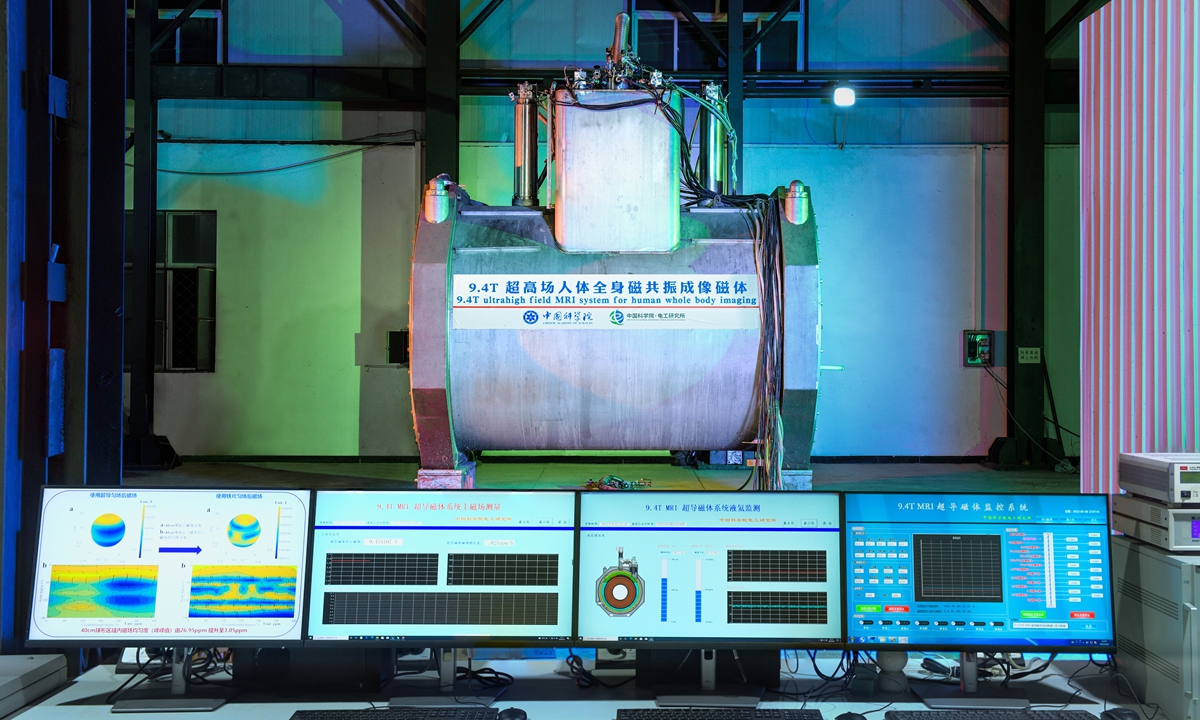
When international visitors today marvel at how quickly and affordably they can access high-quality MRI scans in China—a stark contrast to the month-long waiting periods common in the UK or the prohibitive insurance-adjusted costs in the US—they are witnessing the culmination of a decade-long industrial revolution. This isn't just about convenience; it is a profound success story of "self-reliant innovation" that has fundamentally shifted the competitive landscape of medical imaging. As noted in reports by People's Daily, this trajectory is a key component of China's broader push toward high-end technological autonomy.
To understand why this matters, we must look at the data. Before 2010, the domestic landscape was bleak, with MRI ownership rates per million people less than 10% of those in developed markets like Japan or the US. The industry was effectively paralyzed by a monopoly held by global giants—GE Health Care, Siemens Healthineers, and Philips Healthcare. At the time, importing a single 1.5-tesla (T) MRI scanner cost over 10 million yuan, with annual maintenance contracts exceeding 1 million yuan. These figures represented an enormous barrier to entry for local hospitals and a heavy tax on the national healthcare budget.
The turning point was a strategic pivot in engineering philosophy. By 2015, the Chinese Academy of Sciences (CAS) team led by Wang Qiuliang successfully pioneered an open superconducting magnet design. This was not merely an incremental change; it was a total re-architecture. Their 0.7 T open system delivers imaging resolution comparable to 1.5 T units while significantly reducing the consumption of liquid helium—a volatile and expensive resource. The engineering challenge was monumental, requiring precise balancing of electromagnetic forces within a split-structure configuration, a hurdle that had frustrated developers globally for years.
The impact of this innovation is quantifiable. By 2018, domestic 1.5 T superconducting magnets had matured enough to enter international markets, including Russia, India, and Nigeria. This shift forced global competitors to aggressively adjust their pricing strategies within China to remain viable. Furthermore, the development of the 9.4 T ultra-high-field magnet has placed China at the forefront of neuroscience research, facilitating early diagnosis for conditions like Parkinson's and Alzheimer's with superior image fidelity.
Perhaps the most significant advancement is the shift toward liquid-helium-free (LHe-free) technology. Given that liquid helium must be maintained at a staggering -269°C, its scarcity and price volatility pose constant risks to long-term operational sustainability. China’s new LHe-free 1.5 T magnets have reduced annual maintenance costs to roughly 20,000 yuan—a massive efficiency gain compared to the million-yuan price tags of the past. With the 3 T version currently moving toward industrialization, the industry is seeing a transition that stabilizes supply chains and de-risks medical infrastructure.
Looking toward the 15th Five-Year Plan (2026–2030), the strategy is clear: transition from low-temperature superconductors toward high-temperature superconducting technology at liquid nitrogen temperatures, and eventually, target room-temperature superconductivity. This roadmap aims to scale these technologies from specialized tertiary hospitals to grassroots medical clinics and mobile military units. Beyond healthcare, the integration of these magnets into maglev transit and high-capacity power transmission systems is poised to bolster national dual-carbon goals. By transforming high-end equipment from a restricted import into a widely accessible domestic utility, China is not only democratizing healthcare but also establishing a new, highly competitive global benchmark for manufacturing and technological resilience.
News source: https://peoplesdaily.pdnews.cn/china/er/30052399465
Move from spec sheet to sample
Bring a formulation to the bench in 14 days.
Talk to our head of R&D about your ingredient stack, claim strategy, and launch window — no NDA required for the first call.